Frozen in Time: The Small American Towns Nobody Told You About
The Town That Time Forgot to Update
There's a particular kind of magic that happens when a place just... stops. Not dramatically, not with fanfare — but quietly, like a clock that runs out of battery and nobody bothers to replace. Across the United States, dozens of small towns exist in exactly this suspended state, preserving slices of American life that the rest of the country left behind long ago.
These aren't ghost towns in the cinematic sense. People still live there. Kids grow up there. The diner still serves coffee. But something about the economic or geographic circumstances of these communities created an accidental museum — a living, breathing time capsule that curious visitors are only now beginning to discover.
Kennett, Missouri: The Storefront That Refused to Die
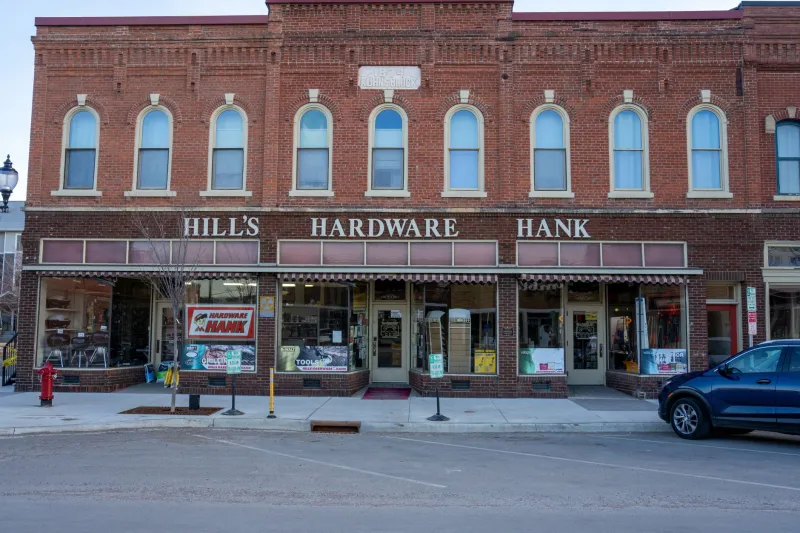
In the Missouri Bootheel, a region more culturally connected to the Deep South than the Midwest, the small city of Kennett holds a peculiar distinction. Several blocks of its downtown commercial strip look almost exactly as they did in the early 1960s — not because of any preservation effort, but because the businesses that moved in during that era simply never left, and the ones that did were never replaced.
Walk past the old Woolworth's-era facade on Second Street and you'll notice the architectural bones of mid-century retail America preserved in remarkable detail: transom windows, terrazzo flooring visible through dusty glass, hand-painted signage fading but still legible. Local historian Dorothy Crane has spent years documenting these storefronts. "Nobody planned this," she's explained to the handful of architectural enthusiasts who make the pilgrimage. "The town hit hard times, and hard times turned out to be the best preservation tool money couldn't buy."
Kennett is also the birthplace of pop legend Sheryl Crow, which draws a trickle of music tourists — but the real discovery for the genuinely curious is the town's unintentional architectural archive.
Thurmond, West Virginia: Population: Very Few, History: Enormous
If you want to experience what a Prohibition-era coal boomtown feels like, Thurmond, West Virginia is about as close as you're going to get. At its early 20th-century peak, this tiny community on the New River processed more freight than Cincinnati. It had a legendary hotel, gambling, saloons operating behind closed doors, and a reputation as one of the wildest spots in Appalachia.
Today, Thurmond has a permanent population you can count on one hand. The old depot — now managed by the National Park Service — still stands in remarkable condition, and the surrounding structures give the place an almost theatrical quality. It feels less like a real town and more like an extremely convincing movie set.
What makes Thurmond genuinely fascinating isn't just its emptiness, though. It's the specificity of what remains. You can still trace the old street grid. The bank building still displays its original signage. And the stories embedded in those walls — of labor disputes, of fortunes made and lost on coal speculation, of communities that built the industrial backbone of America — haven't been sanitized into a comfortable museum narrative. They're just there, raw and unmediated, waiting for someone to pay attention.
Why Mainstream Tourism Keeps Missing These Places
Here's the curious thing: most of these towns aren't secrets, exactly. They're not hidden behind velvet ropes or accessible only to those with insider knowledge. They're just... overlooked. And the reasons why are actually pretty interesting.
For starters, the tourism infrastructure that drives visitor traffic — the TripAdvisor listings, the curated Instagram spots, the travel blog roundups — tends to amplify places that are already receiving attention. It's a self-reinforcing cycle. Towns that haven't invested in visitor amenities don't attract visitors, so they don't generate content, so they don't attract visitors.
There's also a subtler cultural factor at play. Americans have a complicated relationship with decline. We tend to frame economic hardship as something to overcome, not something to document or celebrate. A town that looks like it peaked in 1958 can feel, to some eyes, like a place that failed — rather than a place that preserved something genuinely irreplaceable.
But that framing is shifting. A growing community of architectural enthusiasts, urban explorers (the legal, respectful kind), and history-minded travelers are actively seeking out exactly these kinds of places. They're looking for the unpolished, the unrestored, the accidentally preserved.
Mentone, Alabama: Where the Mountain Traditions Never Left
Tucked into the northeastern corner of Alabama on Lookout Mountain, Mentone is the kind of place that makes you feel like you've taken a wrong turn into a more interesting dimension. The town has been a summer resort destination since the late 1800s, and unlike most resort communities that have reinvented themselves multiple times over, Mentone has largely held onto its original character.
The Mentone Inn has been operating in some form since 1927. The surrounding area hosts a handful of craft studios and small farms that have been in the same families for generations. And every fall, the town holds a festival celebrating Appalachian arts and traditions that draws a devoted crowd of people who feel, maybe a little desperately, that something worth keeping is being kept here.
It's not a museum. Nobody's performing authenticity for tourists. It's just a community that, through a combination of geography, stubbornness, and genuine affection for its own history, has managed to stay connected to a way of life that most of America has long since moved on from.
What You Actually Find When You Go
Visiting these places requires a different mindset than your typical vacation. There's no app that curates the experience for you. The most interesting discoveries tend to happen by accident — a conversation with a local at the hardware store, a side street you almost didn't turn down, a building whose exterior gives absolutely no indication of what it contains.
That's kind of the point, though. These towns reward curiosity in the most direct way possible: by actually having something to discover. Not something that's been packaged and presented and made Instagram-ready, but something real, something that requires a little effort to appreciate.
And in a cultural moment when so much of American travel has started to feel like visiting the same place with different weather, that kind of authentic discovery feels genuinely rare.
The forgotten towns are still out there. They're just waiting for someone curious enough to look.