The Warehouse of Forgotten Things: Where America's Lost Luggage Goes to Die (or Get Rich)
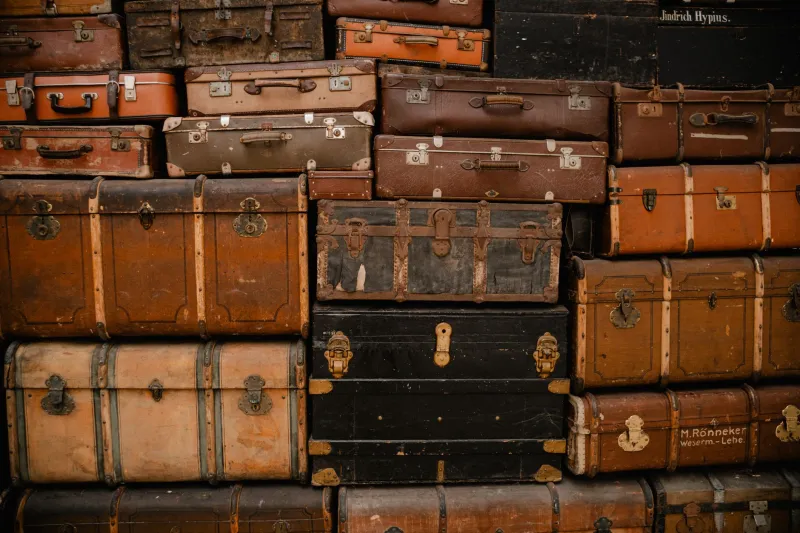
Every year, roughly two million checked bags fail to arrive with their owners. Most are reunited within days. A small percentage never are.
Those bags — plus the contents of lost-and-found bins at airports, train stations, and stadiums across the country — eventually end up in a handful of very strange warehouses. And what happens to them says a lot about us.
Welcome to the Museum of Almost
The most famous of these operations is in Scottsboro, Alabama, where a single retailer has spent decades buying unclaimed luggage from airlines by the truckload and selling it back to the public. The store covers about a city block. On any given day, you can browse wedding dresses, surfboards, laptops, a full-sized suit of armor (a real past item), and row after row of suitcases with strangers' initials still on the tags.
The economics are surprisingly straightforward. Airlines are legally required to attempt to reunite passengers with their bags for a set period, and to compensate them when they can't. After that, the bags are sold in bulk. The Scottsboro operation has turned that orphan stream of property into a tourist attraction that draws visitors from around the world.
But the luggage is only half the story.
The State Is Holding Your Money
Every US state runs an unclaimed property office — and collectively, they're sitting on tens of billions of dollars. Not luggage, exactly: dormant bank accounts, uncashed paychecks, forgotten security deposits, old insurance policies. When a company can't find the rightful owner, the money goes to the state, which holds it indefinitely.
The physical items are stranger. State vaults contain jewelry, coins, and — with unsettling regularity — cremated remains that funeral homes or hospitals couldn't get to the right family. One state comptroller's office told us they keep urns in a locked, respectfully maintained room, and that some have sat unclaimed for decades.
In most states, you can search your name in a public database for free. A surprising number of people find money they didn't know existed. An even more surprising number never check.
The Journey of One Lost Ring
Consider a single item: a wedding ring, engraved, found in the seat pocket of a cross-country flight.
First stop: the airline's lost-and-found, where it's logged, bagged, and stored. If nobody calls, it moves to a central facility. After a holding period, it's either sold to a bulk buyer or, in some cases, auctioned publicly — sometimes with the engraving visible in the listing photos, which is exactly as heartbreaking as it sounds.
The people who catalog these items develop a peculiar relationship with them. One warehouse worker we spoke with described keeping a mental list of the objects that haunted her: a child's baby book, a soldier's medals, a half-knitted scarf with the needles still in it.
"You realize every box is somebody's worst travel day," she said. "Or sometimes, somebody's whole life that just ended and nobody came for it."
The Reunion Desk
It's not all auctions and ambiguity. Some facilities employ people whose entire job is detective work — matching lost items to owners using everything from baggage tags to hotel keycards to the return address on a letter inside a suitcase.
Reunions happen constantly. A grandmother's ring returned fifty years later. A passport delivered hours before an international flight. A family reunited with photos that existed nowhere else.
These moments are the reason the system exists at all. The warehouses and auctions are the fallback, not the goal.
Check Your Name. Seriously.
The practical takeaway from all of this is simple: search your state's unclaimed property database, and check the multi-state one too. It takes five minutes and costs nothing.
But the deeper takeaway is stranger and more interesting. America has quietly built an entire infrastructure for forgetting — a system for handling the things that fall out of our lives. Most of it runs efficiently, some of it runs with real heart, and all of it is a reminder that the border between 'yours' and 'lost' is thinner than we like to think.
Somewhere in a vault right now, there's a box with your name on it. Maybe. Worth a look.