Rewind, Don't Delete: The Underground Crusade to Save Movies Streaming Forgot
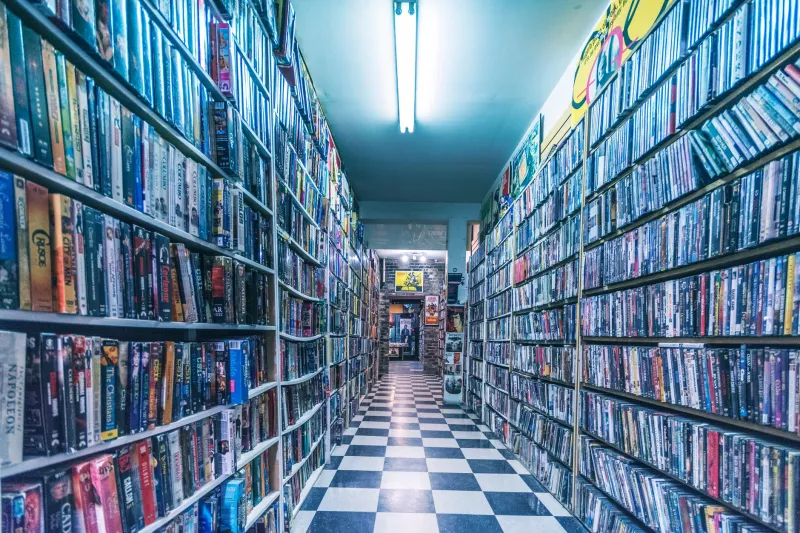
There's a particular smell that VHS collectors know instantly — that faintly chemical, slightly dusty scent of magnetic tape sitting inside a plastic shell that hasn't been cracked open since 1994. For most people, it's nostalgia at best, a trip hazard at worst. For a growing underground community of archivists and obsessives scattered across the United States, it's the smell of history that nobody else is bothering to save.
These are the last librarians of the VHS era, and they are deadly serious about a hobby the rest of the world has written off as hoarding.
What Gets Lost When Nobody's Looking
Here's the thing streaming services don't advertise: they don't have everything. Not even close. The popular narrative of the digital age is that all human knowledge and entertainment is now just a click away, living forever in some server farm in the desert. That narrative is, to put it gently, wrong.
Estimates vary, but film historians and preservation experts generally agree that a significant chunk of American film and television history — particularly content produced before the 1980s — exists in no digital format whatsoever. And even for the video era, the gaps are enormous. Direct-to-video releases from the late '80s and '90s, regional TV broadcasts, locally produced programming, infomercials that accidentally captured cultural moments, low-budget horror films that briefly lived on the shelves of Blockbuster before disappearing entirely — much of it survives only on magnetic tape, and magnetic tape degrades.
Physicists call it "sticky shed syndrome." Collectors call it a nightmare. The magnetic particles that hold the actual recorded information gradually separate from the tape's backing, turning decades of captured footage into a crumbling, unplayable mess. The window for rescuing this material isn't infinite. It's actually closing pretty fast.
The People Doing Something About It
Meet the people who showed up anyway.
Across the country, a loosely connected network of collectors — some operating under the banner of formal organizations, many just working out of spare bedrooms and garage workshops — has been systematically hunting, acquiring, and digitizing VHS tapes that the entertainment industry has no financial incentive to care about. They haunt thrift stores, estate sales, and eBay listings. They maintain spreadsheets tracking which titles have been digitized and which remain "at risk." They share files through private Discord servers and obscure archiving forums. Some have donated thousands of hours of rescued footage to institutions like the Internet Archive.
What drives them isn't nostalgia, exactly — or at least, not only nostalgia. There's a genuine philosophical commitment underneath the hobby. These collectors tend to believe, with an almost missionary conviction, that cultural value isn't the same thing as commercial value. A straight-to-video slasher film from 1988 that sold 12,000 copies and was never reviewed by a single major publication still represents something: a moment in time, a set of creative choices, a slice of what American entertainment looked like at a particular cultural temperature. When it's gone, it's gone, and no algorithm is going to mourn it.
The Technical Side Is Genuinely Brutal
Preserving a VHS tape sounds simple until you try to do it. The hardware alone is a puzzle — consumer VCRs haven't been manufactured since the mid-2000s, which means collectors are dependent on a dwindling supply of aging machines that themselves require constant maintenance. Finding a working, well-calibrated VCR in 2024 is its own minor adventure. Finding someone who can repair one is harder still.
Then there's the tape condition problem. Many tapes that surface at estate sales or thrift stores have been stored in attics or garages, exposed to heat, humidity, and the general hostility of the American climate. Before they can even be played, they sometimes need to be "baked" — a process involving a food dehydrator set to a precise temperature, which temporarily restores the tape's playability long enough to capture a digital transfer. It sounds absurd. It works.
The digitization process itself requires specialized capture cards, careful calibration, and a working knowledge of video formats that most people under 40 have never encountered. NTSC signal processing, time-base correctors, composite versus S-Video outputs — collectors become accidental engineers, learning technical skills that have no real-world application outside of this very specific obsession.
Hollywood's Selective Memory
It's worth asking why studios don't just do this themselves. The honest answer is: money. Clearing the rights to obscure titles — tracking down the estates of deceased directors, negotiating with defunct production companies, untangling decades of contractual confusion — costs more than the content is likely to ever earn. So studios don't bother. They let the rights sit in legal limbo and the tapes sit in landfills.
This is where the collectors' project starts to feel less like a hobby and more like an act of resistance. Streaming platforms have conditioned audiences to think of content libraries as stable, permanent things. In reality, titles disappear from services constantly — licensing agreements expire, corporate mergers shuffle ownership, and content gets quietly delisted with no announcement and no archive. The streaming era hasn't solved the problem of cultural preservation. In some ways, it's made it worse by creating the illusion that the problem is solved.
VHS collectors know better. They've watched enough things disappear to understand that "available somewhere" and "preserved forever" are not the same sentence.
More Than Just Movies
Some of the most valuable material being rescued isn't films at all. It's the stuff that exists in the margins — the local news broadcasts that happened to capture a significant community event, the public access programming that documented subcultures mainstream media ignored, the regional commercials that are now the only surviving record of businesses and neighborhoods that no longer exist.
One collector interviewed for a piece in a film preservation journal described finding a tape that turned out to contain an unaired pilot for a TV show that historians had documented but assumed was completely lost. Another described a tape labeled simply "Christmas 1991" that, when played, turned out to be an hours-long recording of a local UHF station's holiday programming block — complete with original commercials, station IDs, and programming that exists nowhere else on earth.
That's the thing about this project that's genuinely hard to dismiss: you never know what you're going to find until you find it.
The Clock Is Ticking
Preservationists generally agree that the usable lifespan of magnetic tape, even under ideal storage conditions, tops out somewhere around 30 years. A lot of that tape is already past that threshold. What hasn't been digitized yet is in a race against physics, and physics doesn't negotiate.
The collectors know this. It's the thing that keeps the hobby from ever feeling casual. Every thrift store run, every estate sale, every cracked-open plastic shell represents a small bet that the tape inside is still readable — and that someone, somewhere, will care that it was saved.
Most of the time, the audience for rescued footage is small. Sometimes it's just the collectors themselves, sitting in front of a monitor watching grainy video of something the world forgot on purpose. But they'll tell you that's fine. Someone has to remember. Someone has to hit rewind before the tape runs out entirely.