Ruins With Room Service: The Forgotten Dream Resorts That Ambition Left Behind
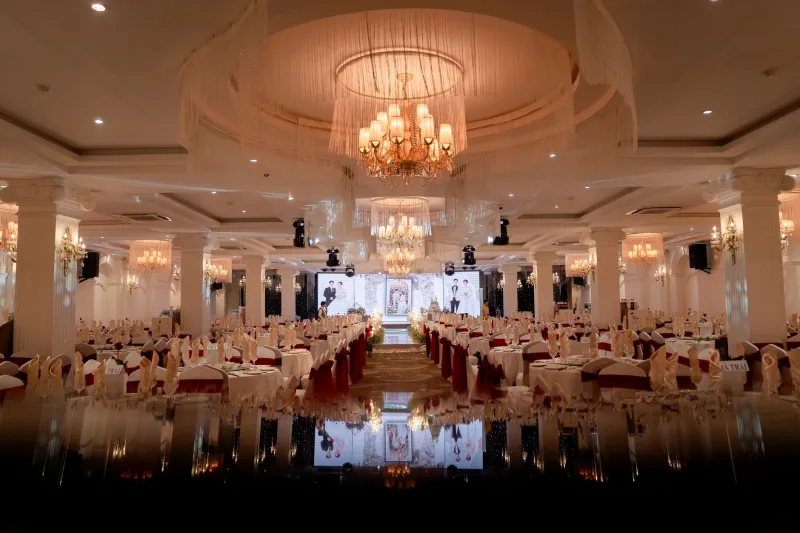
If you know where to look — and increasingly, a dedicated community of urban explorers does — you can find a chandelier still hanging in a ballroom that hasn't seen a guest since 1993. You can walk marble lobby floors now carpeted in moss. You can stand on a resort terrace overlooking a view that was once worth $800 a night, now worth nothing to anyone except the raccoons who've claimed the suite behind you.
America has a ghost resort problem. Or, depending on your perspective, a ghost resort gift. Scattered across the country — in the Catskills, the Poconos, the Florida Everglades, the California desert, the Gulf Coast — are the spectacular ruins of luxury properties that were supposed to be the next big thing. Hotels, theme park resorts, spa retreats, private island compounds. They were built with staggering ambition and, in many cases, staggering money. And then something went wrong. Sometimes catastrophically, sometimes slowly, sometimes in ways that read less like business failure and more like Greek tragedy.
The Catskills: Where Luxury Came to Die (Beautifully)
The Borscht Belt resorts of New York's Catskill Mountains are probably the most famous example of large-scale American resort abandonment, and they remain the most visually arresting. At their peak in the mid-20th century, properties like Grossinger's and the Concord Resort Hotel were genuine destinations — sprawling complexes with multiple pools, golf courses, nightclubs, and enough square footage to qualify as small cities. They hosted Frank Sinatra. They launched comedians' careers. They were, for a specific slice of mid-century American culture, the center of the universe.
The decline was slow and then sudden, accelerated by desegregation (which opened up previously restricted resorts to Jewish vacationers, reducing the cultural necessity of the Borscht Belt enclave), affordable air travel, and the rise of Las Vegas as the preferred adult playground. Grossinger's closed in 1986. The Concord limped along until 1998. What they left behind are structures that photographers and urban explorers now treat like secular cathedrals — enormous, decaying, impossibly atmospheric.
The Concord's main building sat largely intact for years after closing, its Olympic-sized indoor pool still tiled, its kitchen equipment still in place, as if the staff had simply walked out mid-shift and never returned. Developers periodically announced revival plans. None materialized. The building was ultimately demolished in 2019, which felt to many enthusiasts like losing a landmark.
Florida's Forgotten Fantasyland
Florida has its own peculiar chapter in this story, shaped by the state's complicated relationship with real estate speculation, hurricane risk, and the particular brand of grandiose optimism that seems to flourish in subtropical heat.
The Warm Mineral Springs Hotel in Sarasota County is a case study in slow-motion abandonment. Built around one of Florida's natural warm springs, the property attracted health-seekers for decades before falling into disrepair. Various ownership changes, renovation promises, and legal disputes left the historic buildings in a state of suspended decay — the springs themselves still drawing visitors, the hotel structures quietly falling apart beside them.
Then there's the story of Destiny, a planned luxury resort community near Orlando that was supposed to be a self-contained city of 50,000 residents built around high-end amenities. The developer, a Taiwanese conglomerate, invested hundreds of millions before the project collapsed in the early 2000s. What remained was cleared land, infrastructure going nowhere, and a name that now reads as unintentional irony.
The Eccentric Visionaries Behind the Wreckage
What makes these stories genuinely compelling — beyond the haunting photography — are the personalities who drove them. Ghost resorts are rarely the result of ordinary bad luck. They tend to be the result of extraordinary people making extraordinary miscalculations.
Take the story of Nevele Grande in the Catskills, which survived longer than most Borscht Belt properties before finally closing in 2009. Its later ownership involved a series of increasingly desperate revival attempts, each one more elaborate than the last, each one failing for reasons that seem obvious in retrospect but apparently weren't at the time. The pattern is almost universal: a visionary arrives, convinced they can do what previous owners couldn't, pours money into renovations, discovers the structural problems go deeper than the cosmetic ones, and eventually retreats.
In the California desert, the story of Rancho La Puerta's less successful neighbors illustrates a similar dynamic. Wealthy dreamers, enchanted by the romantic isolation of the desert, built spa retreats and wellness resorts that the market simply wasn't ready to support at the price points required to sustain them. The desert reclaimed several of these properties with remarkable efficiency.
The Urban Explorers Keeping These Stories Alive
Here's where the story takes an unexpected turn. The communities that have emerged around documenting abandoned resorts are, in their own way, as fascinating as the properties themselves.
Urban exploration — or "urbex" — has become a genuine subculture, with dedicated photographers, YouTube documentarians, and Instagram accounts amassing hundreds of thousands of followers by venturing into abandoned properties and capturing what's left. Channels devoted to abandoned luxury specifically have found that this particular niche hits something deep in the audience: the collision of opulence and decay is visually irresistible, and the implied narrative (someone had a dream, and the dream died here) is universally legible.
These explorers operate in a legal gray area — trespassing laws vary by state and property, and the urbex community has its own ethical codes around not damaging what they find and not disclosing exact locations of sensitive sites. But their documentation has genuine historical value. In several cases, photographs and video taken by urban explorers represent the only detailed record of interiors that were subsequently demolished.
What the Ruins Are Really Saying
There's something almost philosophical about America's ghost resorts, if you're willing to sit with them for a minute. They represent the outer edge of optimism — the point where ambition detaches from reality and keeps going anyway. Every crumbling ballroom is a monument to someone who genuinely believed they were building the future.
And maybe that's why these places retain such a powerful hold on the imagination. In a country built on the premise that big dreams are worth chasing, the spectacular failures carry a strange dignity. The chandelier still hanging in the empty ballroom isn't just a relic. It's a reminder that someone, once, wanted to make something beautiful — and for a while, against considerable odds, they actually did.
The moss can have the lobby floor. The story belongs to everyone.