Shelf Life: The Quiet Obsessives Hoarding Knowledge the Rest of Us Threw Away
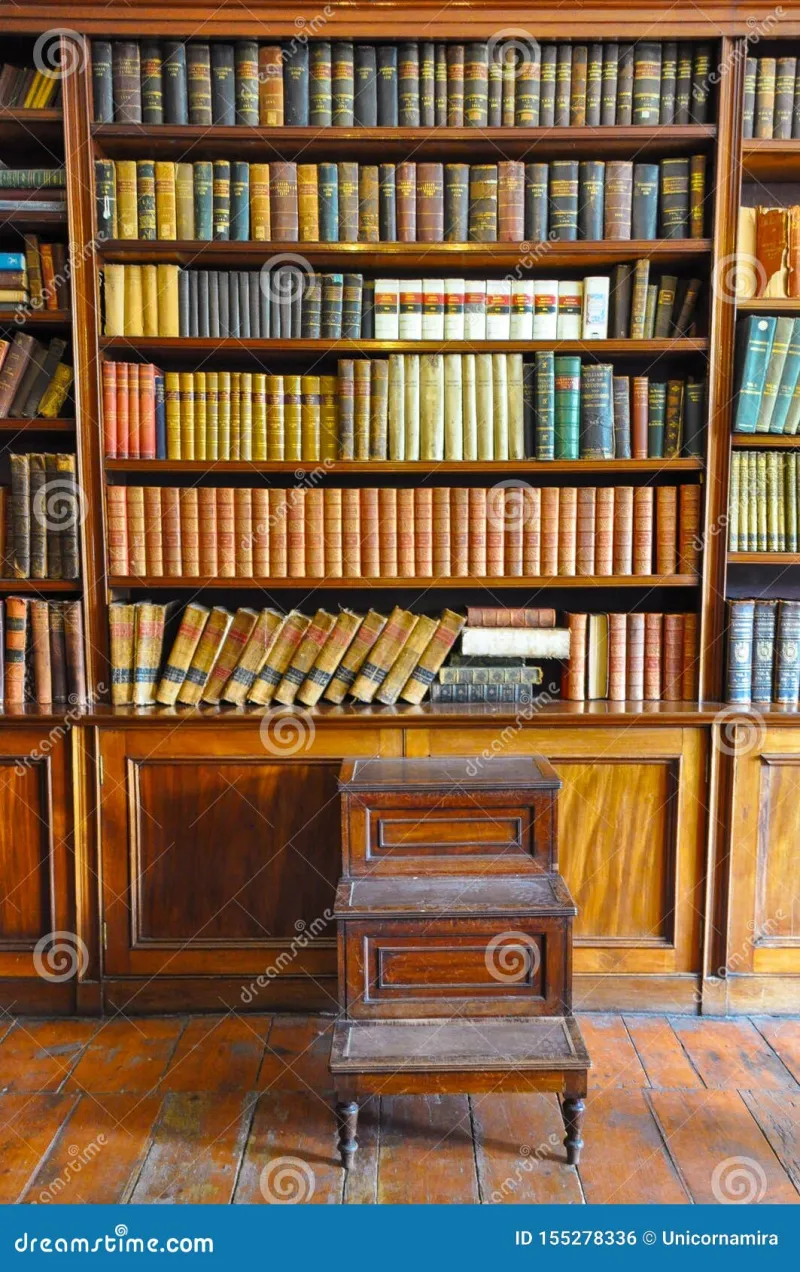
Photo: vintage library shelves old technical manuals dusty books archive, via thumbs.dreamstime.com
Dave Kowalczyk doesn't call himself a librarian. He calls himself a "problem solver with a storage issue." His garage in Akron, Ohio, hasn't held a car since 2003. What it holds instead is approximately 40,000 technical manuals — maintenance guides, repair schematics, and engineering journals spanning roughly a century of American industrial history. Some are laminated. Some are disintegrating. All of them, Dave will tell you, matter enormously.
"Universities threw this stuff in dumpsters," he says, with a calm that somehow makes the statement more alarming. "Whole departments decided it wasn't worth the shelf space. I went and got it."
Dave is not alone. Scattered across the country, a loose and largely invisible community of self-appointed archivists has spent years — sometimes decades — rescuing niche expertise that institutions decided had no future. They are not hoarders in the clinical sense, though the line can look blurry from the outside. They are something harder to categorize: custodians of the specific, the obsolete, and the quietly indispensable.
When Libraries Started Editing Themselves
The roots of this phenomenon stretch back to the 1980s and 1990s, when universities and public libraries began aggressive "deaccessioning" campaigns — a polite word for getting rid of books nobody was checking out. The logic was reasonable enough. Space costs money. Digital resources were on the horizon. Why keep forty years of Textile World back issues when you could use that room for computer terminals?
What the logic missed was the gap between "nobody is checking this out right now" and "nobody will ever need this again." Specialized journals covering pre-digital agricultural chemistry, out-of-print guides to mid-century electrical systems, regional medical research that never made it online — all of it got quietly culled. Some went to used bookstores. A lot went to landfills.
The obsessives showed up with pickup trucks.
Margarette Foss, a retired nurse from Burlington, Vermont, started intercepting discarded medical literature after watching her hospital throw out decades of nursing research during a renovation in 1997. "They were tossing journals from the 1940s through the 1970s," she says. "Studies on patient care techniques, drug interaction research, post-surgical protocols. Things that predate the databases. Things that aren't anywhere online."
Her collection now fills a climate-controlled spare bedroom and a rented storage unit. She's created her own index system — color-coded, cross-referenced, obsessively maintained. When researchers do occasionally track her down, she's usually already pulled what they need before they finish explaining what they're looking for.
The Taxonomy of the Forgotten
What exactly gets preserved in these private archives? The range is genuinely strange and strangely beautiful.
There are technical collections: repair manuals for machines that haven't been manufactured in fifty years but are still running in small shops across the country. There are hobbyist archives: complete runs of publications covering everything from competitive pigeon racing to the finer points of 1960s amateur radio operation. There are professional journals covering specialties that either evolved beyond recognition or quietly ceased to exist — vocational rehabilitation methods from before the Americans with Disabilities Act, early computer programming guides written for machines no museum bothered to keep.
And then there are the genuinely eccentric corners. One collector in Flagstaff, Arizona, has spent thirty years amassing literature on pre-modern American food preservation techniques — not as a prepper hobby, but because he became convinced that regional canning and fermentation methods documented in early 20th-century agricultural extension pamphlets represented food safety knowledge that modern industrial food science had simply reinvented, badly, and at great expense.
"I've had food scientists contact me," he says, clearly enjoying this. "Big companies. They're rediscovering things that farm wives in Iowa figured out in 1912."
The Organization Problem
Here's where it gets complicated. A university library operates on established cataloging systems — Library of Congress classifications, searchable databases, trained staff. A retired machinist with 40,000 manuals in his garage operates on whatever system makes sense to him, which may or may not make sense to anyone else.
This is the great tension at the heart of private archiving: the knowledge gets saved, but the knowledge about the knowledge is often locked inside one person's head. When Dave Kowalczyk eventually passes on, will anyone be able to navigate his system? He's thought about this. He's started documenting his index. He's reached out to a local community college about a potential donation arrangement.
"I'm not going to live forever," he says. "The whole point is that this stuff outlasts me."
Some private archivists have found creative solutions. A small network of collectors in the Pacific Northwest has begun quietly digitizing their holdings using consumer flatbed scanners and shared cloud storage — a grassroots preservation project that operates entirely outside institutional frameworks. The quality isn't archival-grade. The metadata is inconsistent. But the text is searchable, and searchable beats inaccessible every time.
Others have partnered with the Internet Archive, uploading scanned documents to be absorbed into that vast digital commons. It's painstaking work, and most of them do it alone, evenings and weekends, because nobody is paying them and nobody asked them to.
Why It Actually Matters
It's easy to frame these people as eccentrics — and honestly, many of them embrace the label. But the practical stakes are real in ways that keep quietly surfacing.
When older industrial facilities need to service equipment that predates digital documentation, they sometimes find that the only surviving repair manual exists in someone's garage collection. When historians try to reconstruct mid-century public health practices, the journals that survived institutional deaccessioning are sitting in a Vermont storage unit. When a craftsperson wants to revive a traditional technique, the last detailed written instructions might be in a binder in Flagstaff.
Knowledge, it turns out, doesn't automatically migrate into the future just because it once existed. Someone has to carry it.
Margarette Foss, the Vermont nurse, puts it plainly: "People assume that if something was important, it got digitized. That's just not true. Enormous amounts of useful, specific, hard-won knowledge got left behind. Somebody has to care about that."
She pauses, then smiles. "Apparently it's us."
The Accidental Custodians
None of these people set out to become archivists. They stumbled into it — following a curiosity, rescuing something from a dumpster, buying one too many boxes at an estate sale. The accumulation happened gradually, and then it happened all at once, and then one day they looked around and realized they were sitting on something genuinely irreplaceable.
There's something almost poetic about that. In an era when we're constantly told that all information is available everywhere instantly, a quiet army of obsessives has been doing the unglamorous work of making sure that's actually true — or at least, truer than it would be without them.
Dave Kowalczyk's garage isn't going to win any design awards. But somewhere in those stacked manuals is the maintenance guide for a machine that's still running a small shop in rural Pennsylvania, and without it, that shop closes. That's not nothing. That's, arguably, everything.
"People think I'm crazy," Dave says, surveying the stacks. "I think I'm the only sane one."
Hard to argue with him, really.