The Keepers of Everything Nobody Else Bothered to Keep
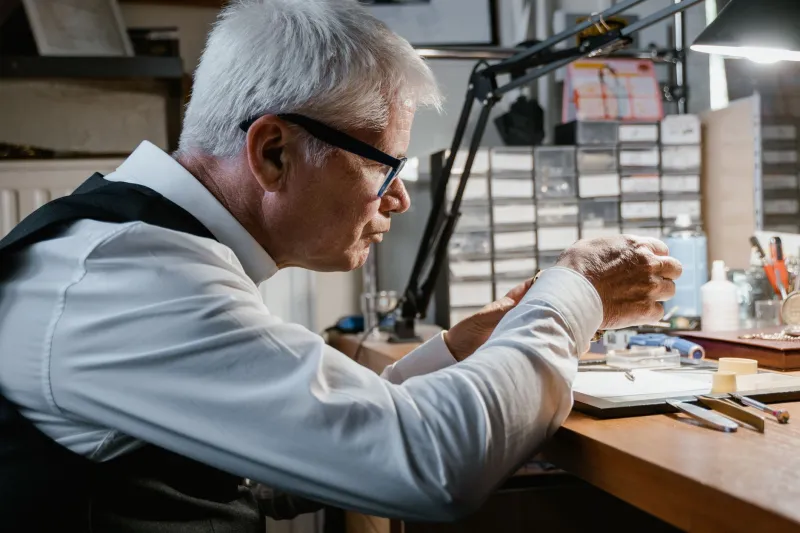
Somewhere in a climate-controlled storage room in rural Ohio, a woman named Patricia spends her Tuesday afternoons cataloging hand-painted trade signs from hardware stores that closed before most Americans were born. She can identify the manufacturer of a particular shade of barn red from the 1880s by smell alone. She's 71. Her replacement hasn't been hired yet.
This is the strange, quiet world of the hyperspecialist curator — the museum professional or archivist who has spent decades becoming the single most knowledgeable human being on earth about something most people have never thought about for even thirty consecutive seconds. And honestly? That's exactly what makes them fascinating.
The Accidental Expert
Nobody grows up dreaming of becoming the foremost authority on defunct regional canning industries or 19th-century doorknob manufacturing. It tends to happen sideways. A history grad student takes a part-time job at a small-town historical society to pay rent. Twenty years later, they've written the only comprehensive study of a particular county's pre-Civil War agricultural equipment, and the Smithsonian calls them for help identifying something nobody else can name.
That's essentially what happened to James Whitfield, the longtime curator of a small industrial museum in western Pennsylvania dedicated to the region's once-thriving glass-cutting trade. "I didn't choose glass cutting," he once told a regional newspaper. "Glass cutting chose me." He'd been hired to organize a donated collection of tools that a local family wanted preserved. The project was supposed to take three months. It took three years. And somewhere in that process, he became the person you called when you found an unmarked glass-cutting wheel at an estate sale and needed to know if it was worth anything.
That's the pattern. Immersion creates expertise. Expertise creates authority. Authority becomes identity.
The Collections Nobody Planned For
What's remarkable about many of these niche archives isn't just their depth — it's their sheer improbability. The American Sanitary Plumbing Museum in Worcester, Massachusetts, is a real place. So is the Vent Haven Museum in Fort Mitchell, Kentucky, which houses over 900 ventriloquist dummies and is, by most accounts, deeply unsettling after dark. These collections exist because someone, at some point, decided that this specific slice of human experience deserved to be remembered.
Often, the collections started as personal obsessions before they became institutional ones. A retired contractor donates a lifetime of salvaged architectural hardware. A former telephone company employee bequeaths boxes of early switchboard equipment along with meticulous handwritten notes. The museum takes it in, stores it, and eventually hires someone to make sense of it — and that person gradually becomes the world's most unlikely expert on early telecommunications infrastructure in the American Southwest.
The knowledge these curators carry isn't just academic. It's tactile, contextual, and deeply weird in the best possible way. They know which factories used which alloys. They know why a particular style of hinge only appeared in houses built between 1902 and 1911. They know the names of the craftsmen, the trade routes, the economic pressures that made certain objects common and others nearly impossible to find. It's living history stored in a single human brain.
What Happens When They Leave
Here's where the story gets genuinely urgent. A significant chunk of America's hyperspecialist curators are aging out of their positions, and the institutional knowledge they carry doesn't automatically transfer. It doesn't live in the catalog system. It's not fully captured in the finding aids. It exists in the muscle memory of someone who has handled the same objects for thirty years and knows, instinctively, what belongs and what doesn't.
Small and mid-sized museums across the country are grappling with this problem in real time. Budget constraints mean curatorial positions go unfilled for months or years after retirement. Graduate programs in museum studies produce enthusiastic generalists, but there's no pipeline specifically designed to train the next generation of cast-iron stove hardware specialists. The knowledge gap, when it opens, tends to stay open.
Some curators are racing to document everything they know before they go. Oral history projects, detailed internal guides, video walkthroughs of storage facilities — these are the improvised solutions to a structural problem. Others are more philosophical about it. "Someone else will figure it out," one longtime archivist at a Midwestern agricultural museum reportedly told a colleague. "Or they won't, and that's what history is."
That fatalism is understandable, but it also stings a little when you consider what's at stake. Once the last person who truly understands a collection retires without passing on their knowledge, the objects remain but the context erodes. A shelf of antique doorknobs becomes a shelf of antique doorknobs — interesting, maybe, but stripped of the story that made them worth preserving in the first place.
The Strange Satisfaction of Knowing One Thing Completely
For all the institutional anxiety, it's worth pausing on what these curators actually experience day to day — because it sounds, in its own peculiar way, kind of wonderful.
There's a particular kind of intellectual peace that comes from being genuinely, comprehensively expert in something. Not expert in a broad field, but expert in a specific, bounded corner of the world where you've read everything, handled everything, and thought about the same objects from so many different angles that new questions still occasionally surprise you. It's the opposite of information overload. It's information saturation — and the people who've reached it describe it with something close to contentment.
They also describe the community it creates. The world of niche curators is small enough that the real specialists tend to know each other, often across institutions and sometimes across countries. There's a network of people who care deeply about the same obscure things, who email each other photographs of unidentified artifacts and argue cheerfully about provenance over conference room coffee. It's a tribe defined entirely by specificity.
Why This Matters More Than It Should
It's easy to frame these stories as charming footnotes — quirky humans doing quirky things in underfunded buildings nobody visits. But there's a stronger argument to be made.
The objects these curators protect are the texture of American life. Not the big moments, not the famous names, but the everyday material culture that tells you how ordinary people actually lived — what they made, what they used, what they threw away and what they kept. That texture is irreplaceable, and it's fragile in ways that famous artifacts usually aren't, because nobody's writing grants to save it.
The hyperspecialist curator is, in the most literal sense, a last line of defense. When Patricia eventually retires from her Tuesday afternoons with the trade signs, something real will be at risk. Not a tragedy, exactly. But a loss worth noticing.
So next time you're driving through a small town and spot a sign for a local historical society or a museum dedicated to something bewilderingly specific, consider stopping. The person behind the desk might be the world's foremost expert on something you've never heard of. And if you're lucky, they'll tell you everything.