Glue, Grit, and Glory: Meet the Americans Who Refuse to Throw Anything Away
Somewhere in suburban Columbus, Ohio, a retired schoolteacher named Donna is elbow-deep in a toaster that stopped working three years ago. She bought it new, loved it, watched it die, and then — instead of tossing it — stuck it in a closet. Last month, she found a local repair café, walked in with her busted appliance and zero expectations, and walked out two hours later with a fully functional toaster and a new hobby. "I felt like I'd beaten the system," she says. "Which is ridiculous. But also kind of true."
Donna isn't alone. Across the United States, a loose but growing movement of repair enthusiasts, tinkerers, and outright activists is pushing back against a culture engineered around replacement. They're fixing laptops, rescuing washing machines, and resurrecting vintage electronics — not just to save money, but to make a point. In a country where the average American generates over 4.5 pounds of trash per day, the act of repairing something has become quietly radical.
The Throwaway Problem Nobody Wanted to Talk About
For decades, planned obsolescence wasn't a conspiracy theory — it was a business model. Products designed to fail, parts glued rather than screwed, software updates that quietly throttle older devices. The message from manufacturers has been consistent: when it breaks, buy a new one.
And for a long time, Americans largely complied. It was easier. It was often cheaper, at least on the surface. And repair knowledge — the kind your grandfather had about engines, the kind your grandmother had about sewing machines — quietly drained out of everyday life over two or three generations.
But something shifted. Maybe it was the pandemic, which forced people to reckon with supply chains and sit still long enough to actually look at the things they owned. Maybe it was rising prices making replacement feel less automatic. Maybe it was the slow-building awareness that a planet full of broken iPhones in landfills is nobody's idea of progress. Whatever the cause, repair is having a moment.
Repair Cafés and the Joy of Fixing Strangers' Stuff
The repair café movement, which started in the Netherlands in 2009, has quietly taken root across the US. There are now hundreds of them — community spaces where volunteers with specific skills (electronics, textiles, furniture, small appliances) show up on weekends to help neighbors fix things for free or for a small donation.
The vibe is part workshop, part social club, part gentle protest. People bring in broken lamps and torn jackets and blenders that sound like they're trying to escape. Volunteers diagnose, teach, and fix. Sometimes things can't be saved. But often they can — and the moment a dead thing comes back to life on a folding table in a church basement is, by all accounts, genuinely thrilling.
"There's this look people get," says Marcus, a retired electrician who volunteers at a repair café in Portland every other Saturday. "Like they just remembered that things don't have to be disposable. That look is why I show up."
The Right-to-Repair Fight Gets Loud
Beyond the community workshops, a more confrontational version of the repair movement is playing out in courtrooms and state legislatures. The right-to-repair movement — which argues that consumers and independent technicians should have legal access to the parts, tools, and documentation needed to fix the products they own — has been slowly, stubbornly gaining ground.
Apple, John Deere, and other major manufacturers have spent years fighting these efforts, arguing that open repair access creates security risks or compromises product integrity. Critics call that what it sounds like: a way to protect revenue from proprietary repair services and force customers into upgrade cycles.
As of 2024, more than two dozen states have introduced right-to-repair legislation. Minnesota became one of the first to pass a meaningful consumer electronics repair law. The FTC has weighed in with support. The tide isn't fully turned, but it's moving — and the repair community is watching closely.
"This isn't just about fixing your phone," says Leila, a policy advocate with a repair-focused nonprofit in Washington, D.C. "It's about who owns the stuff you paid for. That question matters a lot more than people realize."
Learning What Nobody Thought to Teach
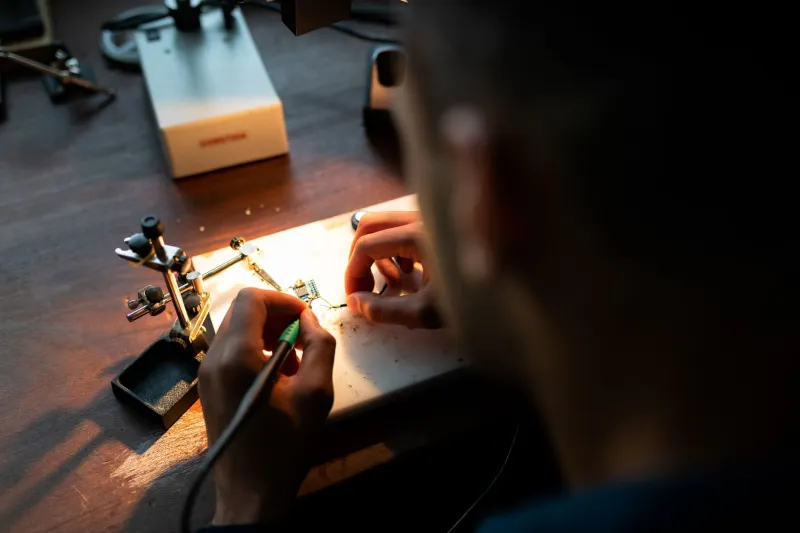
One of the stranger casualties of the throwaway era is repair knowledge itself. Skills that were once passed down through families or taught in shop class have largely vanished from mainstream American life. Most people under 40 have never soldered a wire or replaced a capacitor. Many have never been taught that these are learnable things.
The internet, for all its chaos, has helped fill that gap. YouTube channels dedicated to electronics repair have amassed millions of subscribers. Forums like iFixit — which provides free repair guides and sells parts for thousands of devices — have become essential infrastructure for the DIY repair world. Subreddits devoted to specific appliances or vintage electronics buzz with troubleshooting threads and triumphant before-and-after photos.
There's also a growing network of community colleges and makerspaces offering hands-on repair workshops, often aimed at people who never thought of themselves as handy. The message is consistent: this is not magic. It's a skill. And skills can be learned.
Dave, a 34-year-old graphic designer in Chicago, started watching appliance repair videos during lockdown and has since fixed his dishwasher, his dryer, and a vintage turntable he bought at an estate sale for $12. "I was terrified the first time I opened something up," he says. "Now it's just fun. It's like a puzzle where the prize is not having to spend $400."
Why It Feels Like More Than a Hobby
Ask anyone deep in the repair world why they do it, and the answers get interesting fast. Sure, there's the money saved, the satisfaction of competence, the environmental math. But there's also something harder to name — a feeling that fixing things connects you to a different relationship with the material world. One where things have histories. Where the effort put into an object gives it meaning.
In a culture that has optimized relentlessly for convenience and speed, the deliberate slowness of repair — diagnosing, learning, trying, failing, trying again — feels almost countercultural. Which maybe explains why the communities around it tend to be so warm. These are people who have chosen difficulty on purpose, and that shared choice creates a particular kind of camaraderie.
Donna, back in Columbus, has now attended four repair café sessions. She's fixed a lamp, partially fixed a radio (still working on it), and started teaching her teenage grandson how to use a multimeter. "He thought it was the most boring thing he'd ever heard of," she says, laughing. "Right up until the moment it wasn't."
That moment — curiosity sparking into competence — might be the whole point. The repair movement isn't just about saving broken things. It's about remembering that broken doesn't have to mean finished.