The Humming Rooms Beneath the Internet: A Strange Tour of the Buildings That Hold Your Life Together
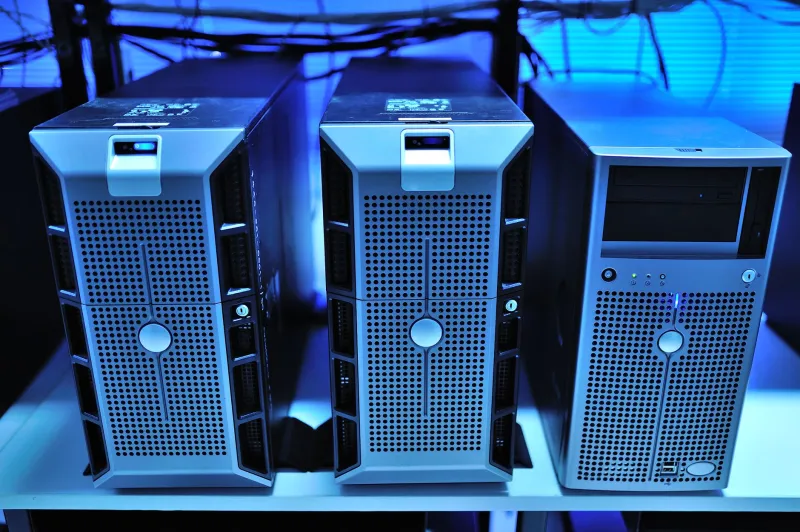
There's a building in Ashburn, Virginia that most people drive past without a second glance. No flashy signage. No foot traffic. Just a low, windowless concrete box surrounded by a fence that suggests, politely but firmly, that you should keep moving. Inside, tens of thousands of servers are stacked floor to ceiling, humming at a frequency that workers describe as something between a jet engine and a very large beehive. That building — and hundreds more like it scattered across the American landscape — is where the internet actually lives.
We talk about "the cloud" like it's some weightless, magical thing drifting above us. It isn't. It's real estate. It's electricity. It's pipes, fans, and a surprisingly small number of humans making sure none of it catches fire.
Welcome to Ashburn, Virginia: The Unlikely Capital of the Digital World
If you had to guess where the internet's beating heart is located, you might say Silicon Valley. You'd be wrong. The answer is a stretch of Northern Virginia known in the industry as "Data Center Alley" — and it processes more internet traffic than anywhere else on the planet.
Ashburn alone hosts somewhere north of 70% of the world's internet traffic on any given day. That stat sounds made up. It isn't. The region became a hub in the 1990s because of cheap land, reliable power infrastructure, and proximity to the fiber optic cables that were being laid along old railroad routes. One decision compounded into another, and now an otherwise unremarkable suburb is quietly running the internet for much of the Western world.
Other hot spots include the outskirts of Chicago, the desert outside Phoenix, and — in a twist that feels almost too on-brand — a cluster of facilities in rural Oregon that sit near cheap hydroelectric power and cold river water. More on that water in a moment.
The People Who Actually Keep the Lights On
Data centers are not staffed by the hoodie-wearing tech bro of popular imagination. The humans who physically maintain these facilities are closer to a hybrid of electrician, plumber, and operating room nurse — meticulous, calm under pressure, and deeply, almost philosophically committed to uptime.
Many are called "data center technicians" or, in some facilities, "infrastructure engineers." Their job involves things like swapping failed hard drives (a task they can often do in the dark, by feel alone), monitoring temperature sensors, and responding to alerts at 3 a.m. when a cooling unit starts behaving strangely. One technician who works for a major facility in the Dallas area described his relationship with the servers like tending a very expensive, very temperamental garden. "You get to know the rhythms," he said. "When something sounds off, you feel it before you see it."
Some facilities run with skeleton crews — a handful of people managing buildings that contain more data than the entire Library of Congress, multiplied several times over. The scale is genuinely hard to wrap your head around.
The Bizarre Science of Keeping Processors Cool
Here's a thing most people don't know: the biggest enemy of a server isn't a hacker. It's heat. Processors generate enormous amounts of it, and if you don't pull that heat away constantly and aggressively, everything melts — metaphorically and sometimes literally.
The cooling systems inside major data centers are some of the most creative engineering happening in America right now, and they range from the mundane to the genuinely strange.
Traditional facilities use massive air conditioning systems — industrial-scale HVAC that would look at home in a hospital or a sports arena. But that approach is expensive and energy-hungry, which has pushed engineers toward more inventive solutions.
Microsoft famously sank a sealed data center pod off the coast of Scotland, using the cold ocean water as a natural cooling mechanism. The experiment worked surprisingly well. Google's facility in Hamina, Finland uses seawater piped in from the Gulf of Finland. Some newer facilities in the American Southwest are experimenting with "direct liquid cooling," where fluid is circulated directly over the chips themselves — basically giving your processor its own personal water jacket.
And then there's the approach being tested by a handful of avant-garde operators: submerging servers directly in tanks of non-conductive liquid. The machines run fully submerged, bubbling quietly like some kind of digital aquarium. It sounds like science fiction. Engineers who've seen it in person say it's oddly beautiful.
Your Most Intimate Moments, Stored in a Desert
There's something philosophically dizzying about this once you sit with it. The voicemail from your late grandmother. The first photo of your kid in the hospital. The argument you had over text that you've reread a hundred times. All of it exists as physical data, encoded on physical drives, in a physical building somewhere — often in a place you've never been and couldn't find on a map.
Amazon, Google, and Microsoft have all built major facilities in rural areas where land is cheap and power is plentiful. Quincy, Washington — population around 8,000 — hosts a cluster of Microsoft data centers that have quietly transformed the local economy. The town gets tax revenue; Microsoft gets cheap hydroelectric power from the Columbia River. It's a strange symbiosis, and it's playing out in small towns across the country.
Meta (formerly Facebook) operates one of its largest data centers in Prineville, Oregon — a high desert town that, before the servers arrived, was best known for cattle ranching. The facility is enormous. Locals say you can hear it from the road on a quiet night.
The Quiet Fragility of All of This
For all the engineering muscle behind these facilities, the system is more vulnerable than most of us would probably like to know. A backhoe cutting a fiber line in the wrong place can knock out service for thousands of businesses. A power grid failure can cascade across interconnected systems in ways that are genuinely hard to predict. And while major data centers have redundant backups, generators, and failover systems that would impress a military planner, the margin for error is surprisingly thin when you consider how much of daily American life now runs through these buildings.
The workers who maintain them know this. It's why the culture inside these facilities tends toward a kind of quiet seriousness that you don't always find in other corners of the tech world. The stakes are real. The consequences of failure are immediate and visible.
Next time your phone loads instantly, your video call connects without a hiccup, or a playlist shuffles itself in half a second — somewhere, in a windowless building in Virginia or Oregon or the Arizona desert, a server rack is humming steadily, a fan is spinning, and someone is probably checking a temperature gauge. The invisible infrastructure holds. For now.