One Last Apprentice: The Dying Crafts That Could Disappear When Their Masters Do
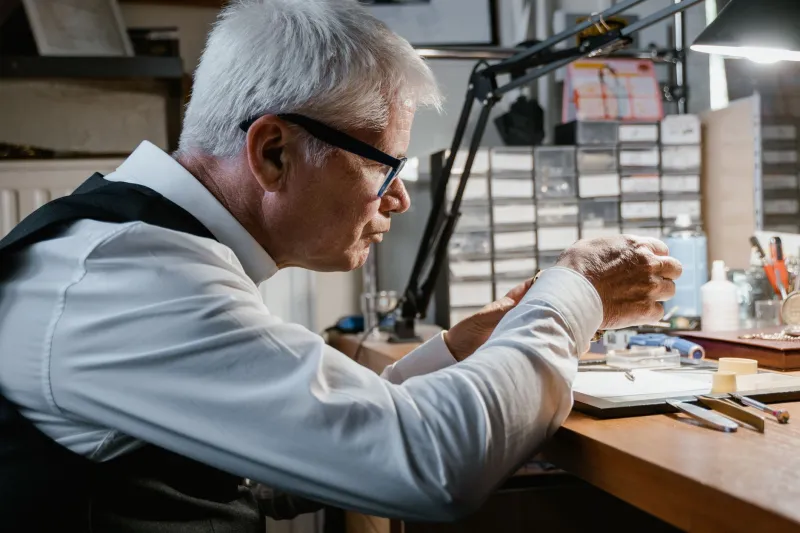
There's a man in rural Pennsylvania who can look at a piece of raw optical glass and tell you, just by holding it up to a fluorescent light, whether it has the right internal consistency to become a precision lens. He's been doing it for 48 years. He has one student. The student is 61 years old.
That's the situation. That's how close we are.
Across the country, in quiet workshops, aging factory floors, and increasingly rare apprenticeship programs, a strange and urgent drama is unfolding. The knowledge that lives inside certain human hands — specific, embodied, painstakingly accumulated over careers that span longer than most people's adult lives — is approaching a kind of critical scarcity point. Not endangered. Not threatened. More like: one bad flu season away from gone.
What "Mastery" Actually Means Here
We throw that word around a lot. But the trades we're talking about aren't things you can pick up from a YouTube tutorial or a six-week certification course. They're disciplines where the learning curve is so steep, and the feedback loop so slow, that you genuinely cannot rush the process.
Take traditional pattern-making for textile mills. Not digital pattern-making — the old kind, where a craftsperson constructs three-dimensional wooden or metal templates used to shape cast parts in industrial manufacturing. It requires an intuitive understanding of how materials shrink, warp, and behave under heat and pressure that you can only develop by making thousands of mistakes over years. The few remaining pattern-makers in the U.S. often describe their knowledge as something they stopped being able to explain and simply started being able to do — somewhere around year fifteen.
Or consider the hand-grinding of custom optical lenses, a skill distinct from the automated lens production that dominates the industry. Master opticians who specialize in highly irregular prescriptions — the ones that machines still can't reliably produce — develop a tactile sensitivity to glass that they describe almost like a sixth sense. You feel the resistance change. You feel when the curve is right. It's not mystical. It's just tens of thousands of hours of repetition that modern manufacturing timelines don't allow for anymore.
The Economics That Broke the Pipeline
So why did the apprenticeship pipeline dry up? The answer isn't one thing — it's a slow accumulation of pressures that each made perfect sense individually and created a disaster collectively.
Automation handled the volume work, so the economic case for training humans in slow, expensive, artisanal methods got harder to make. Liability concerns made formal apprenticeships complicated. Baby Boomer masters retired in waves, often without institutional support to transfer their knowledge. And younger workers, reasonably enough, gravitated toward careers with clearer paths, better pay structures, and less of a "spend a decade being confused" onboarding experience.
The result is what researchers sometimes call a "knowledge cliff" — a point where the number of active practitioners drops below the threshold needed to sustain organic transmission. You need enough masters to train enough apprentices to eventually become masters themselves. When that ratio collapses, the whole system can tip surprisingly fast.
In some niches, we've already gone over that cliff. Certain traditional Japanese-style woodworking joinery techniques that were practiced by American craftspeople in the mid-20th century are now functionally extinct in the U.S. — not because nobody wanted to learn them, but because the last teachers retired before anyone organized a transfer.
The Ones Trying to Interrupt the Timeline
The good news — and there is some — is that a scattered, underfunded, slightly chaotic rescue effort is underway.
In North Carolina, a nonprofit called the Center for Craft has been quietly connecting aging masters with younger artisans through structured residencies, giving both parties the time and financial support to make real knowledge transfer happen. It's slow. It's expensive. It works.
In the Midwest, a few community colleges have started partnering directly with the last remaining practitioners of specific industrial trades to design curriculum before those practitioners are gone. The courses are often weird and narrow — a semester on historical pattern-making techniques, a workshop series on hand-fitting mechanical movements — but the specificity is the point. Broad vocational training doesn't capture this stuff. You have to get granular.
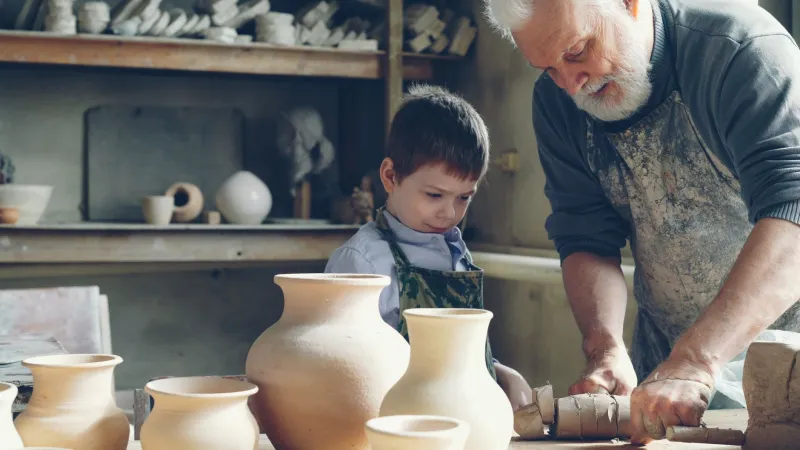
And then there are the individual apprentices who found their masters through sheer stubbornness — showing up, asking questions, making themselves useful until someone agreed to teach them. One woman in her late thirties spent two years visiting a retired milliner in Ohio before the woman agreed to formally pass on her techniques for blocking felt hats over steam-formed wooden molds. She now teaches workshops in Brooklyn. The lineage continues, barely.
What Gets Lost That We Can't Quantify
Here's the thing that doesn't make it into the economic arguments: when a master-level craft disappears, we don't just lose the products it made. We lose a way of understanding materials, of relating to physical reality, that shaped how problems got solved for generations.
Master opticians who hand-grind lenses often become the people hospitals call when a patient's prescription is too unusual for standard manufacturing. Traditional pattern-makers sometimes have insights into material behavior that engineers with advanced degrees don't — because their knowledge comes from a different direction, accumulated through touch and failure rather than formula.
There's a kind of intelligence that lives in practiced hands, and it doesn't always translate into documents or databases. When the hands stop, sometimes the intelligence just stops too.
The Clock Is Ticking, But It Hasn't Run Out
The Pennsylvania optician with his one 61-year-old student? That student has a teenager who's been hanging around the workshop on weekends, genuinely fascinated. No formal arrangement yet. Just curiosity, which is honestly how most of these things start.
That's the recurring pattern in the stories of crafts that survived against the odds — not grand institutional programs, but individual people who found something they couldn't stop thinking about and followed it somewhere inconvenient. The teenager in the optical workshop. The woman making two-hour drives to learn millinery. The retired engineer who decided at 55 that he wanted to learn traditional blacksmithing and found an 80-year-old in rural Virginia willing to teach him.
The extinction timeline is real. The knowledge cliff is real. But so is the stubborn human tendency to be drawn toward things that are difficult, specific, and quietly extraordinary. The race is on, and it's closer than most people realize — but it's still a race, not a eulogy. At least not yet.