Taste Test: The Obsessives Bringing Your Favorite Dead Snacks Back from the Grave
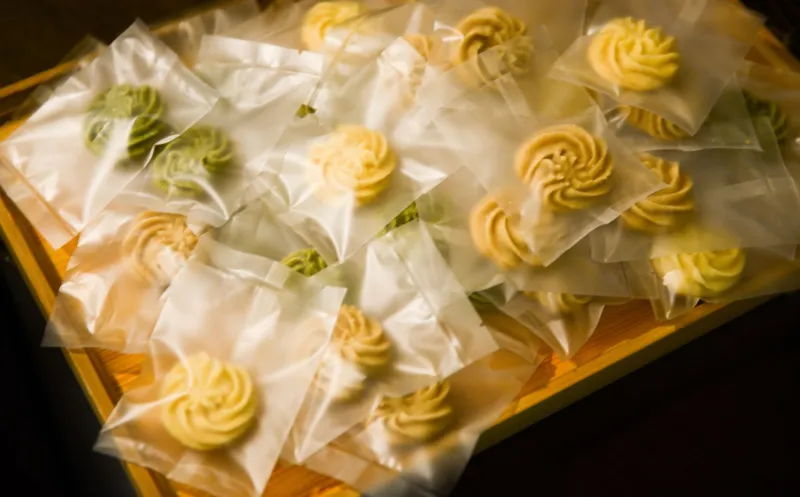
The first thing you should know about Kevin Marsh is that he has tasted failure approximately 340 times in pursuit of a cheese puff.
Not just any cheese puff. Specifically, the Planters Cheez Ball — the round, aggressively orange, slightly powdery snack that Planters discontinued in 2006 and that has occupied a disproportionate amount of space in Kevin's brain ever since. He was eleven when they disappeared. He is now thirty-one, owns a small commercial kitchen in Indianapolis, and has spent the better part of four years trying to reproduce them from scratch.
"Batch 341 is the closest I've gotten," he says, sliding a container across the table with the careful pride of a jeweler presenting a stone. "The texture is right. The flavor is about 90 percent there. I think I'm still missing something in the coating."
He's not alone in this particular obsession. In 2018, Planters briefly brought Cheez Balls back after a social media campaign generated enormous buzz — and then discontinued them again. The internet's collective grief was, by any reasonable measure, disproportionate. And it was also, for Kevin, galvanizing.
"If they're not going to make them, someone has to," he says simply.
The Nostalgia Economy, Homemade Edition
Food nostalgia is not a new phenomenon. Americans have always had complicated emotional relationships with the things they ate as kids. What's new is the infrastructure for doing something about it.
Over the last decade, a loose but surprisingly well-organized community has grown up around the project of recreating discontinued foods — snacks, sodas, fast food items, regional products, candy bars that vanished before most of their fans were old enough to drive. They operate through subreddits, Facebook groups, YouTube channels, and Discord servers, sharing formulations, sourcing ingredients, and critiquing each other's results with a rigor that would feel at home in a professional test kitchen.
Some are driven purely by personal obsession. Others have turned the pursuit into a side business, selling small-batch recreations through farmers markets, Etsy shops, or dedicated websites. A few have gotten genuinely big — building followings of hundreds of thousands and generating income that rivals or exceeds their day jobs.
What they all share is a methodology that blends culinary intuition with something approaching scientific process. Reverse engineering a discontinued product means working backward from memory, from old ingredient lists when they're available, from chemical analysis when they're not, and from the kind of obsessive sensory attention that most people reserve for things considerably more important than a cheese puff.
The Science of Tasting Backward
Recreating a discontinued food is harder than it sounds, for reasons that go beyond just not having the recipe.
Food formulations change over time even when products are still on the market. Ingredients get substituted. Manufacturing processes shift. What you remember tasting at age nine may have already been several generations removed from the original formula. Memory itself is an unreliable narrator — nostalgia adds a warmth and intensity to recalled flavors that reality can rarely match.
"The biggest enemy is your own memory," says Priya Nair, a food scientist in Chicago who moonlights as one of the most respected voices in the discontinued food recreation community. "People remember the emotional experience of eating something, not the actual flavor profile. So when you nail the chemistry, people sometimes say it's wrong — because it doesn't feel the way they remember feeling."
Priya approaches recreations with a rigor she's careful to describe as "enthusiastic amateur" rather than professional — she works in product development for a food company and is cautious about the overlap. But in her personal time, she's reverse-engineered everything from the original Josta cola (a guarana-based PepsiCo product discontinued in 1999) to a regional BBQ chip that was only available in the mid-Atlantic states in the 1980s.
Her process is methodical: start with any surviving ingredient information, use gas chromatography data shared within the community to identify flavor compounds, iterate through formulations, and submit results to a network of trusted tasters who have actually tried the original product. It's slow, expensive, and occasionally maddening.
"I spent eight months on Josta," she says. "Eight months. For a soda that most people have forgotten existed."
Gray Areas and Legal Guardrails
The community navigates a legal landscape that is, to put it charitably, complex.
Recreating a flavor profile for personal use or even for sale is generally permissible — you can't copyright a taste. But using original brand names, packaging, or trademarks is a fast path to a cease-and-desist letter. Most serious recreators have learned this the hard way, or learned it from watching someone else learn it the hard way.
Kevin Marsh doesn't call his product "Cheez Balls." He calls them something deliberately oblique — "Round Cheese Snacks" on his website, with a winking description that leaves the reference unmistakable without crossing any legal lines he's been able to identify. He had a lawyer review his setup, which he describes as "not cheap but extremely worth it."
Others operate in grayer territory, relying on the practical reality that large corporations rarely bother pursuing small-batch operations unless they're making real money or generating significant brand confusion. It's a gamble, and most community members are candid about the risk.
"You're basically betting that they don't care enough about you specifically to do anything," says one recreator who asked not to be named. "So far, so good. But I don't sleep great."
When Passion Becomes a Paycheck
For a growing number of these enthusiasts, what started as a personal project has evolved into something that looks surprisingly like a business.
Amanda Cho started recreating discontinued regional sodas in her Portland apartment in 2019, initially just for herself and friends. She documented the process on Instagram, where her methodical posts about flavor chemistry and small-batch production found an unexpected audience. By 2021, she had a commercial kitchen license and was selling limited runs of three recreated sodas — all regional products that had been discontinued between 1985 and 2003 — through her website.
Last year, she cleared just over $80,000 in revenue. She still has a part-time job, but mostly out of habit.
"I never expected this to be a thing," she says. "I thought maybe fifty people in the world cared about these sodas. Turns out it's a lot more than fifty."
The customer base for these products is driven by something more specific than general nostalgia. People who buy recreated discontinued foods are often chasing a very particular memory — a childhood birthday, a grandmother's house, a specific summer. The product is almost secondary to the feeling it's meant to unlock.
"Someone emailed me to say that drinking my version of this soda was the first time they'd felt close to their dad since he died," Amanda says quietly. "He used to drink it. I didn't know what to do with that. I still don't, really."
Batch 342
Back in Indianapolis, Kevin Marsh is already thinking about his next attempt at the Cheez Ball. He's ordered a new emulsifier he thinks might solve the coating problem. He has a tasting session scheduled with three people who actually remember the original product from before 2006.
He's realistic about whether he'll ever get it exactly right. Memory is imperfect. Ingredients change. The original formula is locked in a Planters vault somewhere, inaccessible and possibly lost even to them.
But "exactly right" might not be the point.
"People taste them and they smile," he says. "Not because it's perfect. Because it reminds them of something. That's enough. That's actually a lot."
Somewhere between the chemistry and the feeling, between the spreadsheet and the smile, that's where these obsessives live. And honestly? The snacks sound pretty good.