Written in Vanishing Ink: The Secret World of Americans Who Read Scripts Nobody Else Can
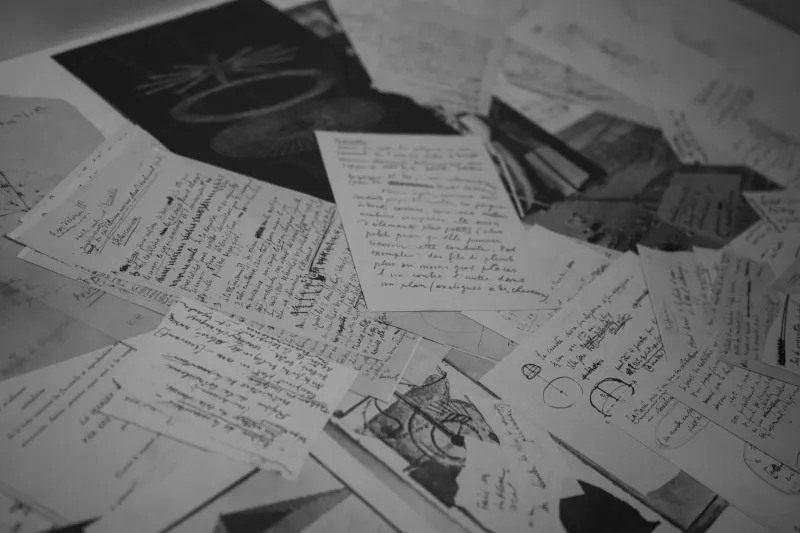
There's a notebook sitting in a box in Janet Kowalski's attic in Columbus, Ohio. It belonged to her grandmother, who worked as a secretary at a law firm from 1952 to 1981. Every page is filled with neat, swooping marks — loops and dashes and little hooks that look like a foreign language, or maybe a doctor's handwriting having a very bad day. For decades, nobody in the family could read it.
Then Janet found the Gregg Shorthand Society on Facebook.
"Within two weeks, someone had transcribed the whole first notebook," she says. "It was grocery lists, mostly. And one pretty devastating entry about a coworker she couldn't stand. My grandmother was hilarious."
This is what it looks like when a dead script gets a second life — not through academia or government funding, but through a loose network of obsessives who just refused to let it go.
Scripts the World Stopped Teaching
America spent most of the 20th century absolutely dependent on shorthand. Gregg, Pitman, Teeline — these weren't novelty systems. They were professional infrastructure. Secretaries, journalists, courtroom reporters, and intelligence officers all used some form of rapid notation to keep pace with the spoken word. At its peak in the 1960s, Gregg shorthand was taught in thousands of high schools across the country.
Then came the tape recorder. Then the personal computer. Then voice-to-text software. By the 1990s, shorthand had largely vanished from American classrooms, and within a generation, the people who could read it fluently were mostly retired or gone.
Left behind: an estimated 100 years of documents — personal diaries, business records, wartime correspondence — written in systems that almost nobody alive can decode.
This is the problem that keeps people like Marcus Webb up at night. Webb is a 38-year-old software developer in Austin who learned Gregg shorthand from a 1929 textbook he found at an estate sale. He now moderates one of the largest shorthand communities on Reddit, where members share drills, help decode mystery documents, and argue — sometimes passionately — about which system is superior.
"Gregg versus Pitman is basically the Mac versus PC debate of the shorthand world," he says, with the particular glee of someone who has had this argument many, many times.
Not Just Shorthand
Shorthand is the most visible corner of this subculture, but it's far from the only one. Across the country, small communities of enthusiasts are keeping entirely different obscure writing systems alive — some historical, some invented, some that occupy a genuinely strange middle ground.
There are dedicated practitioners of Blissymbolics, a symbolic language originally designed in the 1940s as a universal communication system that never quite caught on. There are fans of Visible Speech, a phonetic alphabet invented in the 1860s by Alexander Melville Bell — yes, the father of that Bell — that was briefly used in schools for the deaf before fading out. And there are the cipher enthusiasts, a particularly intense subset who focus on military and intelligence notation systems used during both World Wars.
Eleanor Reyes, a librarian in Albuquerque, has spent seven years studying a Navy cipher shorthand used by communications officers in the Pacific theater during WWII. She got into it after finding a box of letters in an estate sale that nobody could read.
"The family had been trying to figure out what their grandfather wrote for fifty years," she says. "I spent four months on it. Turns out he was mostly complaining about the food and asking for more cigarettes. But there was also a love letter in there that made his granddaughter cry."
That's the emotional engine underneath all of this. These aren't just abstract puzzles. They're locked doors to real people's lives.
Clubs, Competitions, and Unlikely Mentorships
The communities sustaining these scripts are as varied as the scripts themselves. Some operate through formal clubs — the National Shorthand Reporters Association still exists, though it's evolved significantly from its original mission. Others live entirely online, on Discord servers and subreddits and niche Facebook groups that function as something between a study hall and a support group.
What's striking is how seriously they take transmission — the act of passing knowledge to the next person. Many experienced practitioners actively recruit beginners, offering one-on-one mentorship to anyone willing to put in the time. Webb says he's personally taught shorthand basics to over sixty people in the last three years, entirely for free.
"If I don't teach someone, and the people who taught me are gone, then it's just... over," he says. "And I'm not okay with that."
Some communities hold competitions, timed drills where participants race to transcribe spoken passages. The speeds involved are genuinely startling — skilled Gregg writers can hit 225 words per minute with high accuracy. At that pace, they're faster than most people can type.
Others focus less on speed and more on preservation — carefully documenting the rules and conventions of systems that were never fully standardized, creating reference materials that didn't previously exist in digital form.
Why It Matters Beyond Nostalgia
It would be easy to write all of this off as charming but inconsequential — a hobby for people who like old things. But there's a practical argument for why these communities matter that goes beyond sentiment.
America's archives are full of unreadable documents. Libraries, historical societies, and family collections hold enormous amounts of material written in shorthand and other defunct systems. Without people who can decode them, that material is effectively sealed — present but inaccessible, like books with the pages glued shut.
"Historians are increasingly aware of this problem," says Reyes. "There are research papers that literally cannot be written right now because the source material is in Gregg or Pitman and nobody at the institution can read it."
The enthusiast communities are, quietly, solving this problem one document at a time. Several have established informal transcription services, offering to decode historical documents for researchers, families, and institutions — sometimes for free, sometimes for a small fee.
It's citizen archivism in its most literal form: regular people filling in gaps that credentialed institutions haven't gotten around to.
The Notebook in the Attic
Janet Kowalski has now learned enough Gregg shorthand to read her grandmother's notebooks herself. It took her about eight months of practice, squeezing in lessons between work and kids. She's about halfway through the second notebook.
"There's something almost meditative about it," she says. "You have to slow down. You have to pay attention to every mark."
Her grandmother, it turns out, was a keen observer of the world around her — recording small dramas from the office, clipping recipes she never made, noting the weather on days that mattered to her for reasons Janet is still piecing together.
None of it would have been recoverable without a community of strangers on the internet who cared deeply about a writing system the rest of the world forgot.
Somewhere right now, in a Discord server or a Facebook group or a community center meeting room, someone is learning to read something nobody else around them can. And somewhere else, there's a box in an attic waiting for exactly that person.